The representation of the world
- Francesca Zanardi
- Mar 22, 2021
- 2 min read
Updated: Jul 7, 2021
We assume that everything we see in front of us, from sunset to the simple view of a door, is seen by everyone in our same position as identical. But that's not even remotely the case.
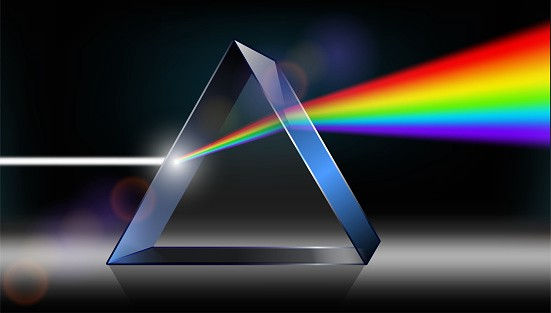
For instance, colours do not exist in the environment, to be more precise, what exists is light, and colours are reflections of light. This, of course, is one of many theories, but the one I’m interested in. Paul Cezanne once said that colour is the "place where our brain and the universe meet". Cézanne was a painter, but, he expressed how colour manifests itself through the interaction between perception and the world (Thompson, 1995).
Cognitive psychology is a branch of psychology interested in investigating how individuals construct a representation of the world around them. Perception is a complex process an experience created by sensory stimulation, which can change with added information. As far as we know, there are two primary processes: one that informs the brain through stimuli obtained from the environment. And the other one has its roots in the brain and influences our perception by adding the person's knowledge of the environment.
As the light meets the eyes, it refracts onto the retina, where its selected, organized and interpreted by the brain's visual cortex. There are objective and subjective factors that influence perception, and the latter are motivations or needs, interests and values, past experiences, age, restorative set and sociocultural factors. Culture can affect us massively, also causing suggestions, prejudices and perceptual biases (Goldstein, 2018).
Edward Sapir and linguist Benjamin Whorf proposed the Sapir-Whorf hypothesis arguing that language may influence cognition. In an experiment by Winawer (2007) were tested English-speaking and Russian-speaking participants in a task of discrimination of different shapes of blue. Different blue-coloured squares were presented to the participants, and they were asked to pick the colour which matches the one on the top compared to the two on the bottom. Researchers discovered that, as predicted, a language's structure influences a native speaker's interpretation and categorization of experience. In reality, compared to Russian speakers who have three different shapes of blue in their language, English-speakers perceived far fewer different colour shapes.
However.
If we leave aside, how perception works and how it is achieved, we can see that nothing is as it appears. We should never be too adamant about what we believe. We should still try to listen and see things from different perspectives and always bear in mind that our viewpoint, is just that: ours. We should never, ever judge a book by its cover; instead, we should try to see it from any angle possible and maybe under another light, as colours, we could see it differently. Not as expected.
Every day we are bombarded with news, information from our surroundings which, of course, we take to be truthful. The perception of colours teaches us that from a change of light, shadow or reflection our perspective could totally change. This, in addition to giving us an insight into the perception process, can also make us reflect on how our certainties could be nothing more than deceptions.
References
Thompson, E. (2003). Colour Vision: A Study in Cognitive Science and the Philosophy of Perception. Routledge: London. doi:10.4324/9780203417676
Goldstein, E. B. (2011). Cognitive psychology: Connecting mind, research, and everyday experience. Australia: Wadsworth Cengage Learning.


Comments